

What is a Silicone Hose Pipe? Complete Guide
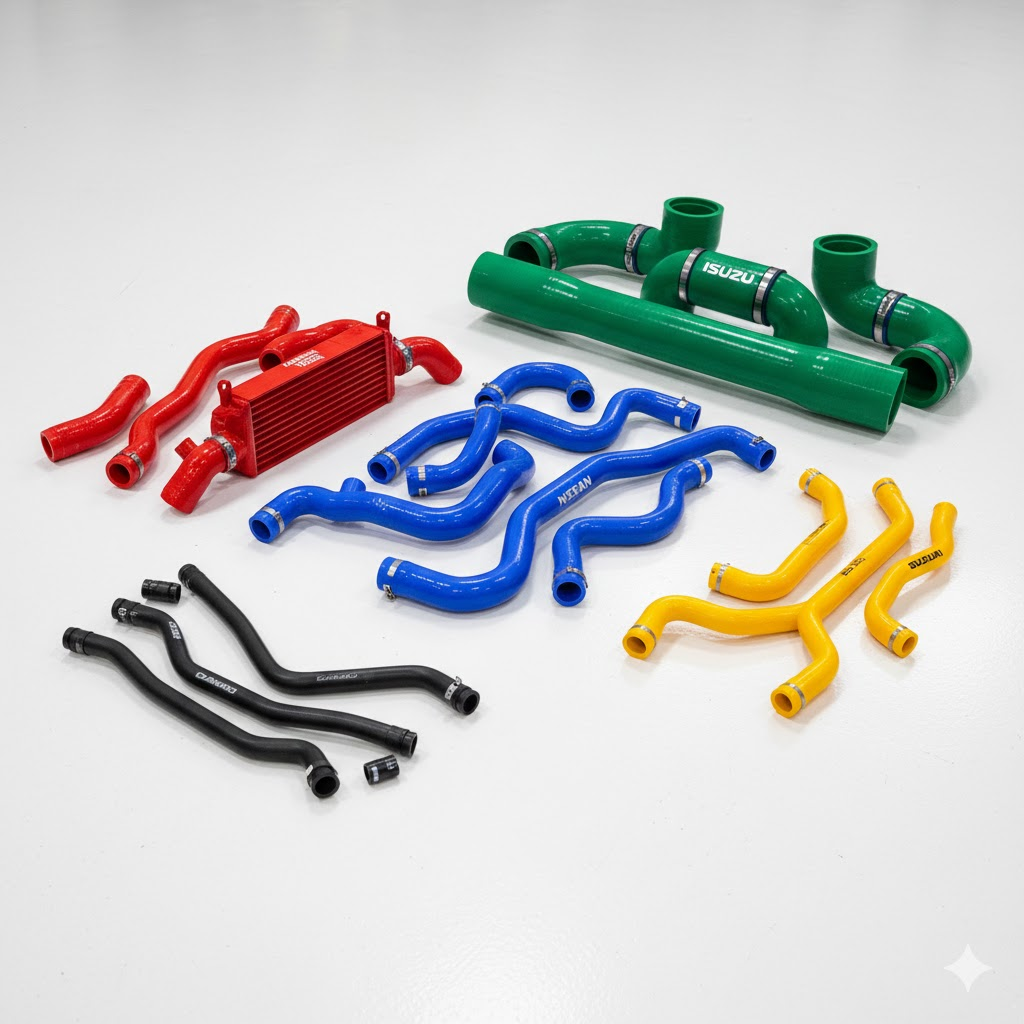
Silicon Hose Pipes – Nissan, Daewoo, Isuzu, Suzuki, Mitsubishi
A silicone hose pipe is a flexible, high-performance conduit made from silicone elastomers. It is designed to transport fluids and gases in harsh environments where traditional organic rubber would fail. It consists of a synthetic polymer Si-O (silicon-oxygen), often reinforced with multi-ply layers of polyester, aramid, or fiberglass fabric to handle high internal pressures. Unlike standard rubber, this pipe is chemically inert, remains flexible from -60°C to +260°C, and is specifically engineered for automotive, industrial, and medical applications requiring extreme thermal stability and ozone resistance.
Research indicates that while silicone’s upfront cost is 25% to 40% higher than traditional EPDM rubber, its service life is often 4x longer, drastically reducing the total cost of ownership by eliminating downtime caused by thermal hardening.
Comparison between Silicon Hose Pipe and Rubber Hose Pipe
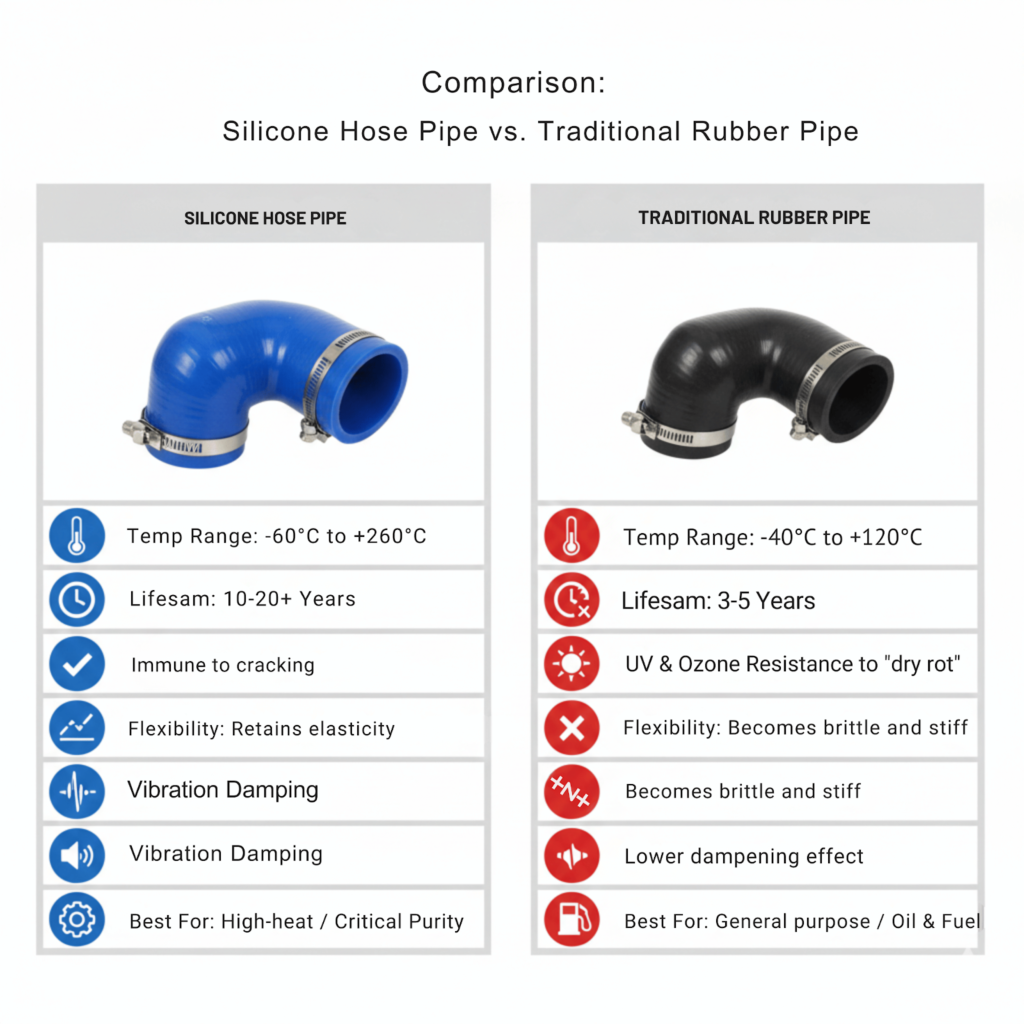
Comparison between Silicon Hose Pipe and Rubber Hose Pipe
High Grade Silicon Hose Pipe
Following the standardized industrial format, here are the technical benchmarks for a high-grade silicone hose rubber pipe.
Application of Silicon Hose Pipe
- Product Name: Multi-Ply Reinforced Silicone Hose.
- Purpose: High-performance thermal management and fluid/air transfer.
- Application: Turbocharger systems, radiator coolant lines, food-grade processing, and pharmaceutical cleanrooms.
- Roll Grade: Available in Platinum-cured or Peroxide-cured.
Manufacturing of Silicon Hose Pipe
- Technicals – Casting and Forging: Unlike metal casting, these pipes are multi-stage extruded. They feature internal reinforcement layers of Polyester, Aramid/Nomex for temps up to $250°C, or Steel Wire for suction applications.
- Heat Treatment: Every hose undergoes a rigorous post-curing process in industrial ovens to ensure all volatile organic compounds are removed, resulting in a chemically inert and stable pipe.
Key Dimensions & Quality of Silicon Hose Pipe
- Dimensions:
- Diameter: Standard IDs from 6.3mm to 102mm.
- Tolerance: Precise engineering to 0.5 mm.
- Weight: Significantly lighter than reinforced rubber, reducing the overall weight of vehicle engine bays or industrial assemblies.
- Inspection & Quality:
- Quality Standards: ISO 9001:2015, REACH, and FDA 21 CFR 177.2600 compliance.
- QA/QC Inspectors: All units undergo hydrostatic burst pressure testing at 3x the working pressure.
- Machinery Test Report: Each batch is accompanied by reports detailing durometer hardness, tensile strength, and elongation at break.
Why Silicon Hose Pipes are better:
The primary reason for selecting a high-temperature silicone hose is the failure of organic rubber.
- Hardening and Cracking: Under constant thermal cycling, rubber “cooks,” losing its plasticizers. Silicone remains soft and pliable for decades.
- Environmental Degradation: If your equipment is outdoors, UV rays and ozone attack the carbon bonds in rubber. Silicone is naturally UV-stable.
- Complex Routing: Silicone’s superior bend radius allows for installation in tight engine bays where a rubber pipe would kink or collapse.
Conclusion
The silicone hose rubber pipe is the correct investment if your system operates under high pressure, extreme temperature, or requires a long lifespan .Though the initial procurement cost is higher, the elimination of maintenance cycles and the prevention of catastrophic leaks provide a far higher return on investment.


